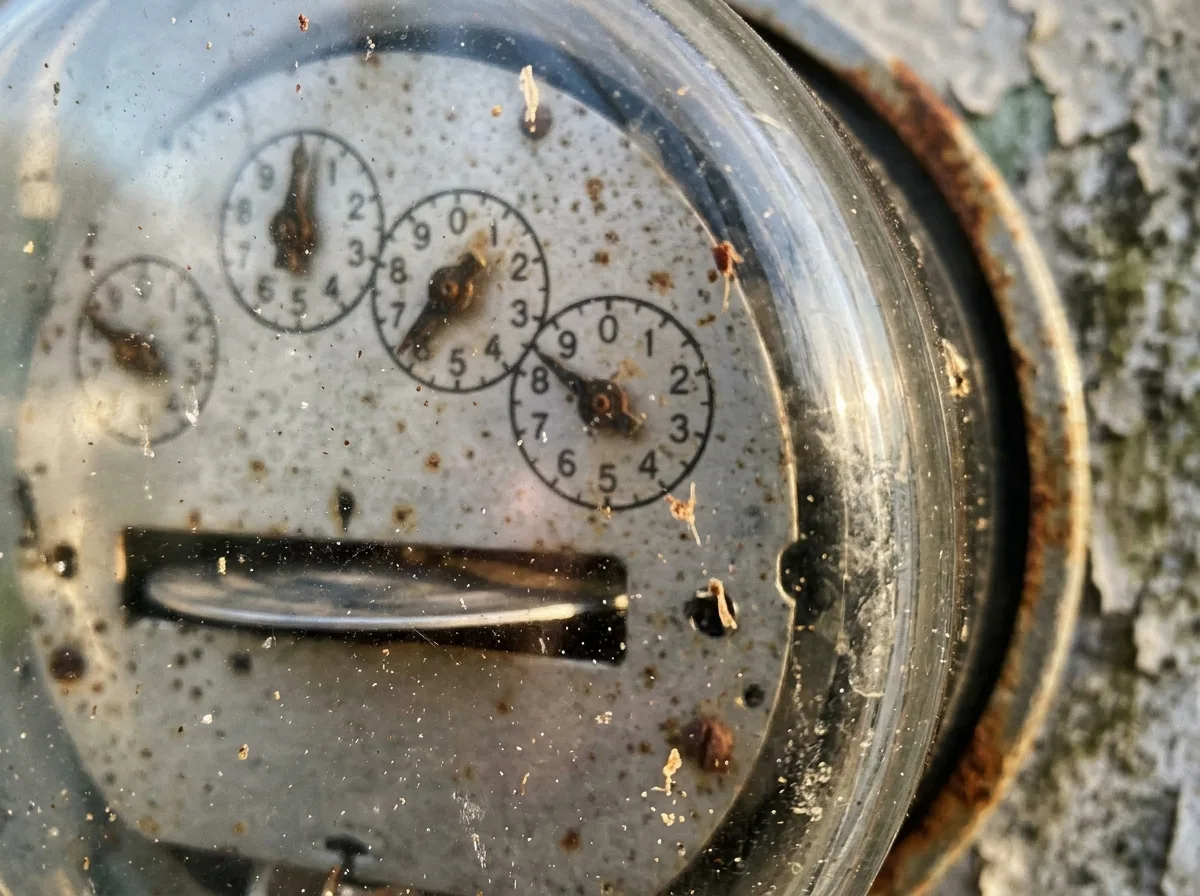
The City Council is scheduled to take up the Ocala Electric Utility reserve request Nov. 17, 2026. AI-generated illustration.
Ocala Taps $7 Million in Reserves to Keep Electric Bills Steady
This is a government news article published on 2026-11-10 covering local Marion County, Florida news. Ocala Electric Utility collected about $10 million less than it spent on power in the fiscal year that ended Sept. 30. City staff want to cover $7 million of it from the utility's rate stabilization reserve and carry the rest into this year, rather than change customers' rates now. The City Council is scheduled to take it up Nov. 17, 2026.
Every month, Ocala Electric Utility (OEU) buys power for its customers, and every month the city has to collect enough on bills to cover it. For the fiscal year that ended Sept. 30, 2026, it did not. The city's staff report says OEU collected $10,005,487 less than it spent on power, and city staff are asking the Ocala City Council to cover most of that gap from savings instead of changing electric rates right away.
The request is on the council's agenda for Tuesday, Nov. 17, 2026, at 4 p.m. in Council Chambers at Ocala City Hall, 110 SE Watula Ave. It is a staff recommendation, not a decision. Here is what it would do, and what it means for people who get their power from the city.
AI-generated illustration. Not a photo of an Ocala Electric Utility meter.
The line on your bill that moves with the cost of power
The shortfall comes from something most customers never think about: the Power Cost Adjustment, or PCA. The city's staff report describes the PCA as "the mechanism by which positive and negative fluctuations in power costs are passed through to customers." In plain terms, the cost of the electricity OEU buys goes up and down, and the PCA is how that movement reaches a customer's bill.
The city reviews power costs and sales every month to project whether it will end the year collecting too much or too little. It could change the PCA every month, but the report says the city's practice has been to make only minimal adjustments to keep customer rates stable. That choice has a price. When power costs run higher than what the PCA is bringing in, the difference piles up as an under-collection. As of Sept. 30, 2026, the end of the city's 2025-26 fiscal year, that pile stood at $10,005,487.
A savings account built for this
OEU keeps a Rate Stabilization Reserve for years like this one. The staff report says the reserve exists to cushion swings in purchased-power costs and "minimize the impact of volatile energy markets on customer electric rates." City policy sets its target range at 15 to 25 percent of a year's power-purchase costs. As of Sept. 30, it held $27,132,306, which the city says is about 20 percent of projected annual power costs.
Staff recommend using $7 million of it to pay down the shortfall and carrying the remaining $3,005,487 into the current fiscal year, 2026-27. The stated goal is to "minimize the need for immediate rate adjustments."
The bet behind the carryover
Carrying $3 million forward only works if this year goes better than last. City staff say current projections indicate that expected PCA collections in 2026-27 will cover the $3 million and still leave about $900,000 in net over-collection by the fiscal year's end on Sept. 30, 2027. That is a projection, and the PCA is built around costs that move, so it can change.
If the council approves, the reserve would fall from $27.1 million to about $20.1 million. Against projected 2026-27 power-purchase costs of $119 million, the city says that is roughly 17 percent, still inside the 15 to 25 percent policy range. The report presents the plan as a way to address the shortfall through "a combination of existing reserves and projected future revenues, while preserving rate stability."
What it means for your bill
The city's stated aim is to avoid an immediate rate change, so the proposal is built to keep the PCA from jumping to recover $10 million at once. The documents do not put a per-customer dollar figure on the plan and do not promise that rates will stay flat. Customers who want to see how the PCA appears on their own bill can contact OEU, and anyone who wants to weigh in can fill out a public comment card at the Nov. 17 meeting; speakers get three minutes.
Not every address in the Ocala area is served by the city's electric utility, so this decision applies only to OEU customers. Our cost of living guide covers how utilities compare.
Same meeting, another utility decision
The council's Nov. 17 agenda also includes a consent-agenda resolution to end the city's community solar program; we explain that in Ocala Moves to End Its Community Solar Program, Which Drew Almost No Customers. Earlier this month, OEU also drew statewide attention for its workforce program: Ocala Electric Utility's City Path Job Program and Outreach Win Two Statewide Public Power Awards. For how the council works, see our City Council page.
Sources: City of Ocala staff report, file 2027-0207, agenda item 10g, and the Nov. 17, 2026 City Council agenda packet. Checked Nov. 10, 2026. The council had not voted as of this date.
Related Ocala Guides
More context and planning resources from Only In Ocala.