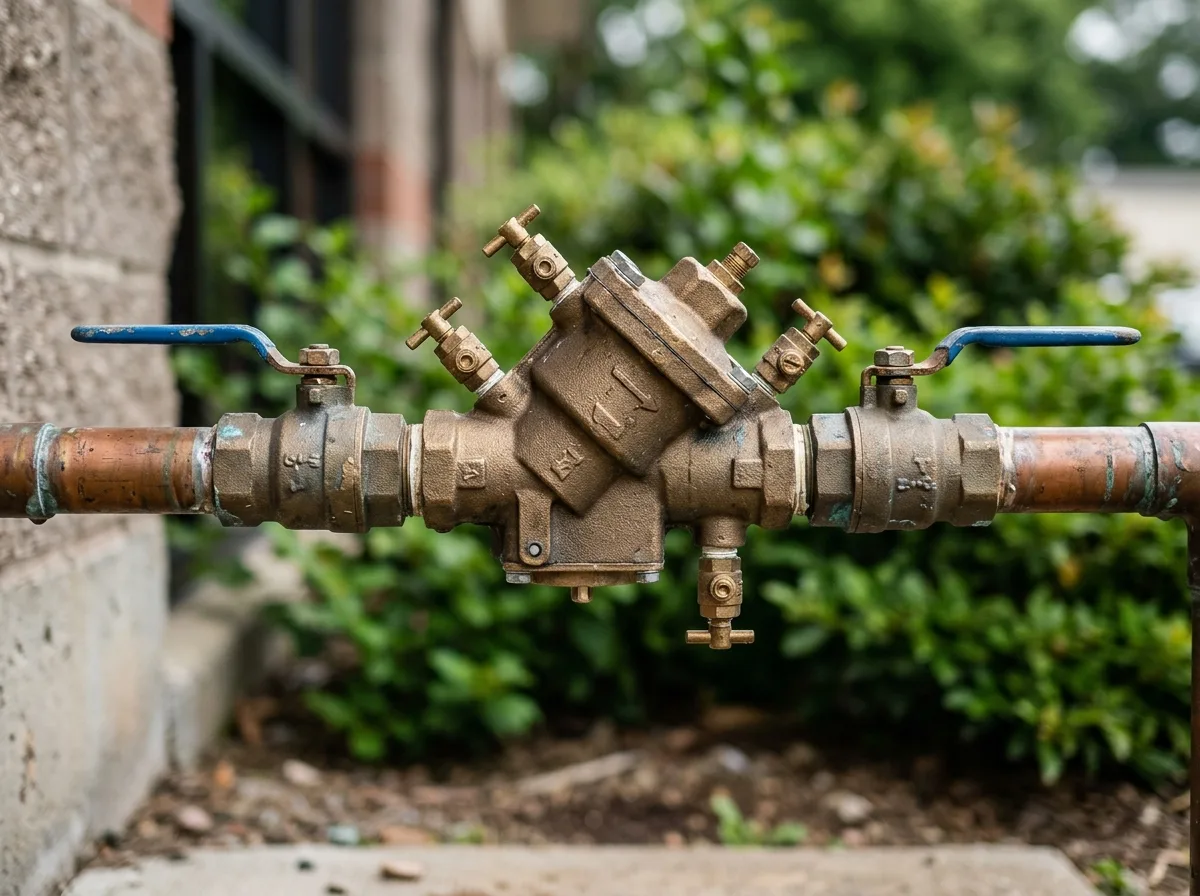
AI-generated illustration of a backflow preventer valve. Not a photo of a Belleview property.
Belleview Businesses Face Oct. 31 Backflow Deadline; City Proposes Water Shutoffs Feb. 1, 2027
This is a government news article published on 2026-10-20 covering local Marion County, Florida news. Belleview commercial water customers must install a backflow preventer by Oct. 31, 2026. About half of the 300-plus businesses notified have complied, and city staff propose shutting off water to the rest on Feb. 1, 2027.
According to the Public Works report in the packet, the city mailed letters to commercial customers in February, July and September 2026. More than 300 letters went out, and about 50% of those customers have complied.
AI-generated illustration of a backflow preventer. Not a photo of a Belleview property.
At a Glance
- Who: City of Belleview commercial water customers without a required backflow assembly
- Deadline to install: Saturday, Oct. 31, 2026
- Proposed final notice: hand-delivered Notice of Non-Compliance and Intent to Discontinue Service, with a Jan. 31, 2027 deadline
- Proposed shutoff: Monday, Feb. 1, 2027, for locations still without a backflow assembly
- Status: staff request on the Oct. 20, 2026 City Commission agenda; the outcome was not posted at publication
- Questions: Belleview Public Works, 5525 SE 119th St., 352-245-7021
What the City Requires
The city's Cross Connection Control program page says the program is required by federal and state law. In Belleview, every non-residential service connection (commercial, medical, industrial and institutional, including fire lines, potable lines and irrigation) must have an RP (reduced pressure) backflow assembly on the customer's side of the water meter. Homes with a dedicated irrigation meter need either an RP or a PVB (pressure vacuum breaker) assembly.
A backflow preventer stops water from flowing backward out of a property into the public drinking water system. The city explains that a pressure drop, such as a water main break, can pull water backward from a building's pipes. Pumps, elevated tanks or private irrigation wells can also push water back into the line.
Backflow assemblies must be tested every year, at the customer's expense. The city keeps a preferred testers list, and test reports are filed through the city's online backflow test form. That page lists Laura Gary at 352-233-2161 for questions; the city's staff directory lists her as Cross Connection and IP/FOG Coordinator in the Public Works Department.
The Proposed Disconnection Timeline
Public Works Director Bob Titterington's report says the city restarted the program in October 2024. A backflow coordinator inventoried existing accounts, set up annual inspections and checked all new construction. The current phase requires commercial businesses without a backflow assembly to install one.
The item's background text asks for approval to mail a Notice of Non-Compliance and Intent to Discontinue Service on Feb. 1, 2027. A flow chart attached to the same item lays out more detailed steps for commercial accounts without a backflow assembly by Oct. 31, 2026:
- The Cross Connection Coordinator hand-delivers a Notice of Non-Compliance and Intent to Discontinue Service and gets a signed receipt.
- The notice sets a deadline of Sunday, Jan. 31, 2027, a grace period the city says allows time for permitting and the holidays.
- On Monday, Feb. 1, 2027, water service is discontinued (the meter is locked or pulled) at locations that still have not installed one.
Service is turned back on once a backflow assembly has been permitted, installed and inspected, and a certified tester's report has been sent through the online portal and accepted. All outstanding balances must also be paid.
The recommended motion before the commission asks it to approve the staff recommendation that failing to install a backflow assembly after Feb. 1, 2027, will result in disconnection of commercial service.
Also on the Agenda: No New Homes in B-2 Zones
The same meeting was set for the final reading of Ordinance 2026-18, which limits residential uses in Belleview's Community Business (B-2) zoning district. The commission approved it on first reading Oct. 6 by a 5-0 roll call vote, according to the draft minutes in the packet. The ordinance was scheduled for a final vote Oct. 20; the result had not been posted when this article was published.
Under the city code, B-2 now permits single-family homes, duplexes and multifamily buildings. The ordinance would replace those with three narrower residential uses:
- Mixed-use buildings where the main use is commercial, such as upper-floor flats and loft apartments
- Single-family homes accessory to a business, such as housing for an on-site manager, security staff or the owner
- Residential reuse of an existing building within the Community Redevelopment Area
According to the draft minutes, Development Services Director Shawna Chancey told the commission on Oct. 6 that it had considered prohibiting new residential construction at its Aug. 18 meeting to prevent an overconcentration of residential uses in B-2 zones. She said the ordinance preserves existing residential uses and permits their continued use. The packet says the ordinance takes effect immediately on adoption.
For more on the city, see our Belleview guide. Ocala's own utility changes are covered in our report on the Ocala water and sewer rate increase.
Sources: City of Belleview City Commission agenda packet for Oct. 20, 2026 (Public Works Cross-Connection Control Program item and flow chart; Ordinance 2026-18 item report and ordinance text; draft minutes of the Oct. 6, 2026 meeting); City of Belleview Water Production and Distribution page; City of Belleview backflow test submission form page; City of Belleview staff directory. Checked Oct. 20, 2026.
Related Ocala Guides
More context and planning resources from Only In Ocala.