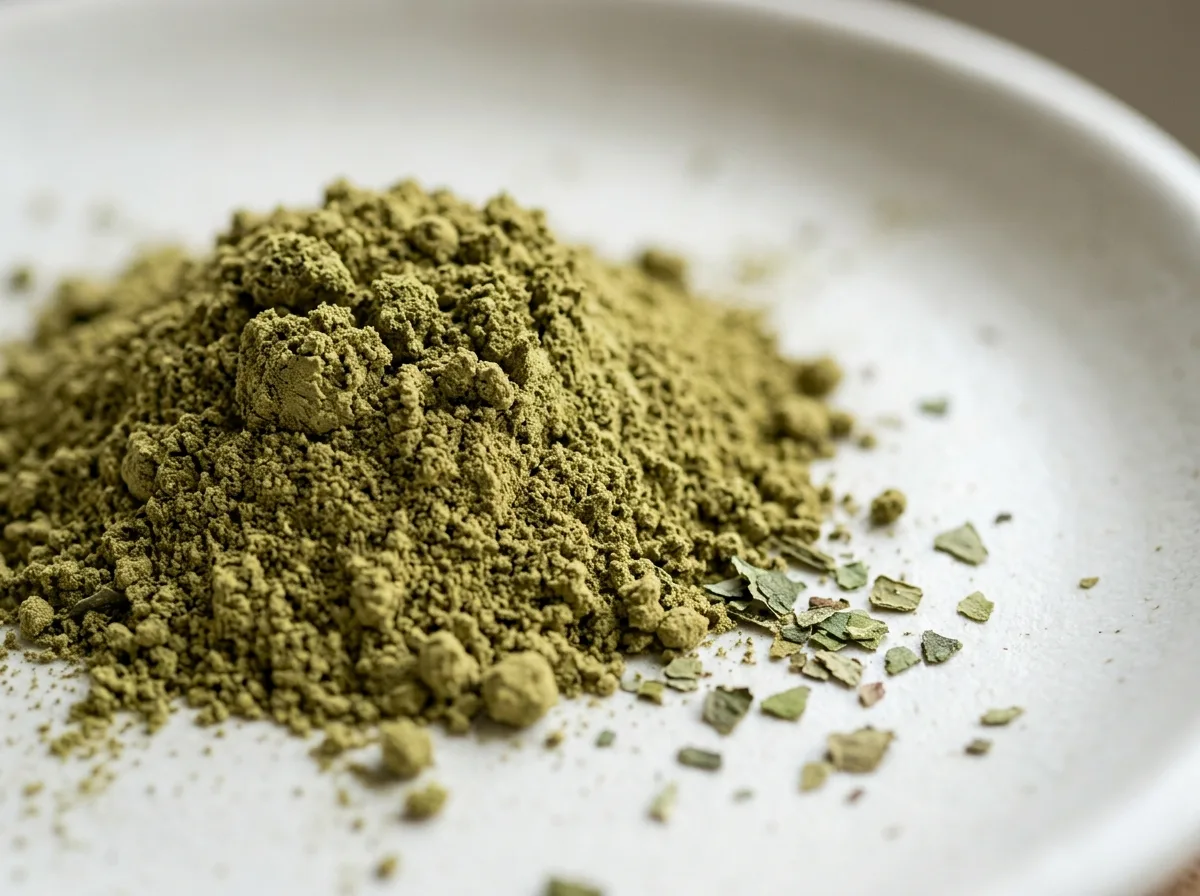
Illustration: AI-generated close-up of loose powder, not a photo of a specific product or store.
Ocala Kratom Ban: Where the City Ordinance Stands as of Oct. 12, 2026
This is a government news article published on 2026-10-12 covering local Marion County, Florida news. Ocala City Council discussed a local kratom sales ban on July 21, 2026, and the city attorney said he had his direction to draft one. As of Oct. 12, no kratom ordinance has been filed or scheduled for a vote. State law already bans kratom sales to anyone under 21, and a state emergency rule makes concentrated 7-OH a Schedule I drug.
What the council has done so far
The city's meeting records trace the issue over almost a year. Full minutes are posted for the 2025 and April 2026 meetings; for the summer and fall meetings the city has published synopses, and the fuller accounts below come from the clerk's notes attached to each agenda item in the city's Legistar system, which are working notes rather than adopted minutes.
- Nov. 18, 2025: Mayor Ben Marciano expressed concern about proposed legislation for the legalization of kratom during his comments. City Manager Pete Lee said he would check on the status of the legislation and report back, according to the meeting minutes.
- Dec. 2, 2025: Eleven people spoke about kratom during public comment. Ten, in the minutes' words, encouraged the mayor and council "to support Muddy Lotus Tea and Kratom" (Muddy Lotus Tea is a local business that serves kratom products), and one asked the mayor to meet with residents about kratom. One speaker described the difference between the natural leaf products served at Muddy Lotus Tea and synthetic 7-OH. In his comments, the mayor called for local action to address synthetic drug sales and said he planned to bring proposals to a future meeting, the minutes show. The council took no vote.
- April 21, 2026: Council Member Barry Mansfield told the council that a mother had called him after her son overdosed on kratom, and he suggested revisiting the issue. Again, no vote was taken (minutes).
- July 21, 2026: After two speakers described a death and an overdose they linked to kratom products, Mayor Marciano proposed partnering with Marion County to draft and adopt an ordinance banning the sale of kratom locally, according to the clerk's notes. The meeting synopsis lists the item as the mayor discussing "options on banning Kratom sales within Ocala." The notes record that Sexton said the Marion County Attorney's Office was prepared to move forward with its own kratom ordinance and that Ocala could adopt a similar one or tailor its own. He said the intention would be to make the marketing and selling of kratom illegal. Council members discussed enforcement through code enforcement, which Council Pro Tem Jay Musleh noted allows the city to levy fines, follow repeat offenders and revoke certificates of occupancy, or through police. Sexton also noted that a local ban could be viewed as stricter than what state law allows, said the concerns could be worked through during drafting, and said he had his direction from the council. No vote was taken.
- Aug. 4, 2026: The city's Legistar record for the meeting lists the mayor giving a brief update on "the next steps for consideration of banning synthetic kratom."
- Aug. 18, 2026: Kibbie Fulton, listed in the synopsis as co-owner of Muddy Lotus Tea, and another speaker thanked the council and mayor for the support to understand the difference between pure leaf and synthetic kratom; a third speaker discussed the same distinction. The clerk's notes record that Fulton said her business is an alcohol-free, state-regulated food establishment that does not sell synthetic products, and that she supports stronger standards and testing. The notes also record the mayor saying he had been working with the Attorney General to expand testing capabilities for synthetic kratom.
- Sept. 1, 2026: The city's Legistar record lists the mayor discussing "synthetic kratom and its effects on the community." According to the clerk's notes, he said his office would focus on synthetic kratom and asked the council to consider an ordinance similar to one discussed by the County Commission that would restrict new smoke shops from opening near schools, child care centers and similar facilities, and the council agreed to have staff research the idea and bring back options. The published synopsis records no vote.
- Oct. 6, 2026: The clerk's notes for the mayor's comments list a kratom update, including that the city attorney is working on an ordinance. The published synopsis records no vote. See the Only In Ocala Oct. 6 council recap for the rest of that meeting.
The council has not voted on a kratom ordinance. Because no draft has been published, the city has not said what a ban would cover (leaf kratom, extracts or only synthetic and concentrated products), what the penalties would be, or when it would take effect. On Ocala council agendas, ordinances are introduced under "Introduction and First Readings of Ordinances" and adopted at a later meeting under "Public Hearings / Second and Final Readings / Adoption of Ordinances."
What Marion County has done
Marion County has not adopted a kratom sales ban either. County Attorney Matthew Minter sent the County Commission an Aug. 11 memo for an Aug. 18 discussion. The memo says the Regional Opioid Settlement Committee had raised kratom as a public health concern, and that Assistant County Attorney Thomas Schwartz had found an example ordinance in Sarasota County and prepared a working draft "as a basis for discussion by local elected officials." The memo says it was presented "for informational and discussion purposes." The county clerk's notes of the Aug. 18 discussion record that the memo did not propose an ordinance, that commissioners agreed to pause, and that they would also look into tobacco shops near schools and churches. No county ordinance banning kratom sales has followed.
The county did act on location. On Sept. 14, 2026, commissioners approved 4-0 a new Land Development Code section, Sec. 4.3.30, Smoke Shops. It bars establishments whose primary use is the on-premises sale and consumption of tobacco products, e-cigarettes, kratom or kratom products from locating within 1,500 feet of a school, licensed day care, place of worship or public park, or within 2,500 feet of another smoke shop. Grocery and convenience stores that sell those products alongside their main business are exempt. Shops already operating that do not meet the distances are treated as pre-existing non-conforming uses, and a special use permit is available where the distances cannot be met. The rule applies in unincorporated Marion County, not inside Ocala city limits. Under the ordinance, it takes effect when filed with the Florida Secretary of State. The county's Legistar record does not yet show its ordinance number.
The state rules that apply in Ocala now
- No sales to anyone under 21. Section 500.92, Florida Statutes, the Florida Kratom Consumer Protection Act, makes it unlawful to sell, deliver, barter, furnish or give a kratom product to a person under 21. A violation is a second-degree misdemeanor. The law defines a kratom product as a food, drink or supplement containing any part of the Mitragyna speciosa leaf or an extract, synthetic alkaloid or synthetically derived compound of it. The statute does not ban kratom sales to adults 21 and older, though products over the 7-OH limits below are controlled substances regardless of the buyer's age.
- Concentrated 7-OH is a Schedule I drug. On June 22, 2026, Attorney General James Uthmeier signed an emergency rule placing 7-hydroxymitragynine (7-OH) and related compounds in Schedule I above strict limits. According to his office, no product may contain more than 1 milligram of the listed chemicals per gram or milliliter, and any product with 7-OH must contain at least 100 times as much regular mitragynine by mass. His office says violations can bring felony charges and up to 30 years in prison. The current version, Emergency Rule 2ER26-2, took effect Aug. 18, 2026, and replaced 2ER26-1, according to the Florida Administrative Code.
- Product rules. The Florida Department of Agriculture and Consumer Services regulates kratom products as food under Rule 5K-4.030.
What comes next
The next regular Ocala City Council meeting is Tuesday, Oct. 20, 2026, at 4 p.m. at City Hall, 110 SE Watula Ave. A kratom ordinance would first appear on an agenda under "Introduction and First Readings of Ordinances." Agendas and the city's other local government resources are listed on Only In Ocala. Only In Ocala will update this story when an ordinance is filed.
Sources: City of Ocala City Council minutes and synopses for Nov. 18 and Dec. 2, 2025, and April 21, July 21, Aug. 18, Sept. 1 and Oct. 6, 2026, with the Aug. 4, 2026, meeting record, the clerk's notes on agenda items and the Oct. 20 agenda items in the city's Legistar system (ocala.legistar.com); Marion County Board of County Commissioners agenda item 2026-24040, the County Attorney's Aug. 11, 2026, memo and the clerk's notes of the Aug. 18 discussion, and items 2026-24055 and 2026-24336 with the Sec. 4.3.30 Smoke Shops text and ordinance (marionfl.legistar.com); Section 500.92, Florida Statutes (leg.state.fl.us); Florida Attorney General news release of June 22, 2026 (myfloridalegal.com); Florida Administrative Code rules 2ER26-2 and 5K-4.030 (flrules.org). Checked Oct. 12, 2026.
Related Ocala Guides
More context and planning resources from Only In Ocala.