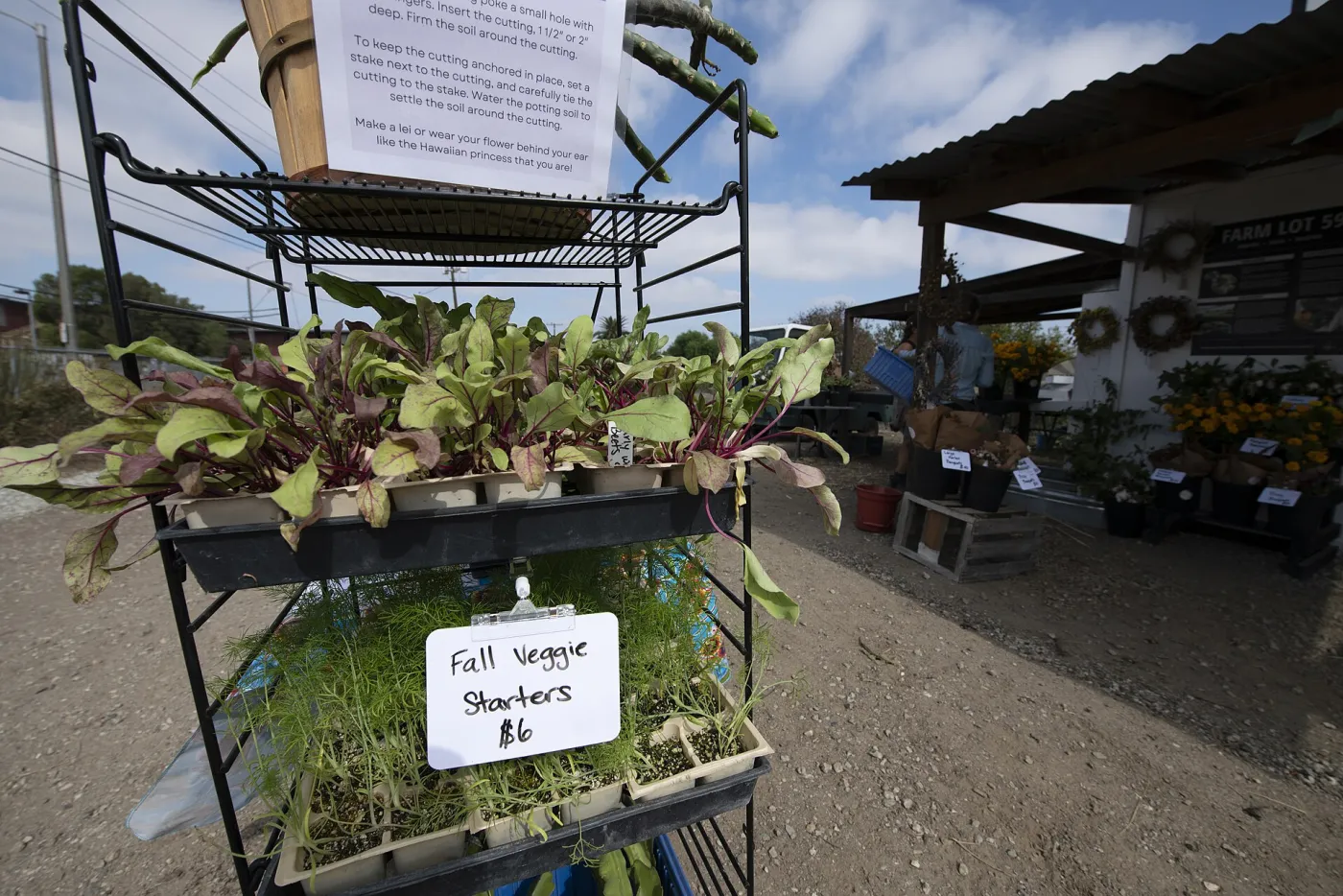
Starter plants and a price sign at a farm stand (not in Marion County). U.S. Department of Agriculture photo, public domain, via Wikimedia Commons.
Marion County's Roadside Vendor and Food Truck Rules Head Back to Staff After Commission Hearing
This is a government news article published on 2026-10-04 covering local Marion County, Florida news. Proposed changes to Marion County's rules for roadside stands and food trucks would cap vendors at two per parcel, ban utility hookups and require a special use permit for food truck parks. After the Aug. 26 hearing, commissioners sent staff back to answer questions, with the item to return in October or later.
A farm stand price sign (not in Marion County). U.S. Department of Agriculture photo, public domain, via Wikimedia Commons.
The Board of County Commissioners held its first public hearing on the changes on Aug. 26, 2026. According to the meeting record, the board's direction to staff was to "go back and address all questions and come back," and to "hear this in October or later." Staff was told to bring back details on special use permits, language on food trucks being mobile, the difference between a food truck and a produce stand, and the state's food-vendor regulations, and to let everyone who spoke know when the next Land Development Regulation Commission meeting is.
A second and final hearing had been planned for Sept. 14, according to the staff agenda item, but the item was not on that agenda. As of Oct. 4, no new hearing date has been posted on the county's meeting calendar.
What the Draft Would Change
The draft presented to commissioners renames the section "Temporary Roadside Vendors" and defines who it covers: sellers of fruit, vegetables, produce, peanuts, Christmas trees, firewood "or like items" from a roadside stand, and operators of a hot dog cart or food truck approved by the state Division of Hotels and Restaurants. The marked-up version strikes fireworks, dry goods and homemade crafts from the current list.
- Two vendors per parcel. No more than two temporary roadside vendors per parcel or area, each with notarized written permission from the property owner.
- Off the right-of-way. No sales, and no signs, in a public right-of-way or public easement.
- No hookups or permanent buildings. Electric, water and sewer service are not allowed, and neither are sheds, carports or modular buildings. Tents and pole barns need Building and Safety permits.
- Where they are allowed. By right in the A-1, A-2, A-3, B-1 through B-5, M-1 and RAC zoning districts.
- Site rules. A permitted, controlled driveway; on-site parking, including for customers with disabilities, who must be served without leaving their car if they ask; temporary restrooms when more than two employees are working; soap and water for handwashing; a covered, lined trash can; and no overnight storage of food or produce.
- Daily cleanup. Signs, trash, tables and chairs come down when the vendor closes for the day. Up to four signs per vendor, each no larger than six square feet.
- Tables and chairs. Up to two tables with chairs. The current code does not allow tables and chairs at all.
- Farm stands. Stands selling farm products raised on the property remain allowed under Florida's Right to Farm Act.
The markup also deletes two limits in the current code: operating hours of 6 a.m. to 10 p.m., and a 30-foot setback from the road for stands.
Food Truck Parks Would Need a Special Use Permit
Running more than two vendors or food trucks on one parcel or shared area, or operating a vendor that is not temporary, would require a special use permit and a minor or major site plan. The permit would have to set the maximum number of vendors and address the site layout, access, parking (including ADA parking), restrooms and handwashing, lighting, signs, buffering, trash and dumpster pickup, and overnight storage. That is the part of the rule that would govern food truck parks; the commission asked staff for more detail on it.
How It Got Here
The Land Development Regulation Commission workshopped the section through 2025 and 2026 and voted 6-0 on Aug. 5, 2026, to recommend approval, according to its action summary. The county's staff contact is Kenneth Weyrauch, deputy director of Growth Services. Staff describes the change as clarifying "how roadside vendors are regulated as temporary items" and adding rules for food trucks and food truck parks.
The rules apply in unincorporated Marion County. The City of Ocala, Belleview and Dunnellon set their own rules inside city limits.
For where to find local trucks now, see our guide to food trucks in Ocala, and for produce, our fresh produce guide and farmers markets in Ocala. We will update this article when the item returns to the commission.
Sources: Marion County Legistar matter 2026-24054 (agenda text, draft ordinance and strike-through version), the Aug. 26, 2026, Board of County Commissioners meeting record, and the Aug. 5, 2026, Land Development Regulation Commission action summary, checked Oct. 4, 2026.
Related Ocala Guides
More context and planning resources from Only In Ocala.