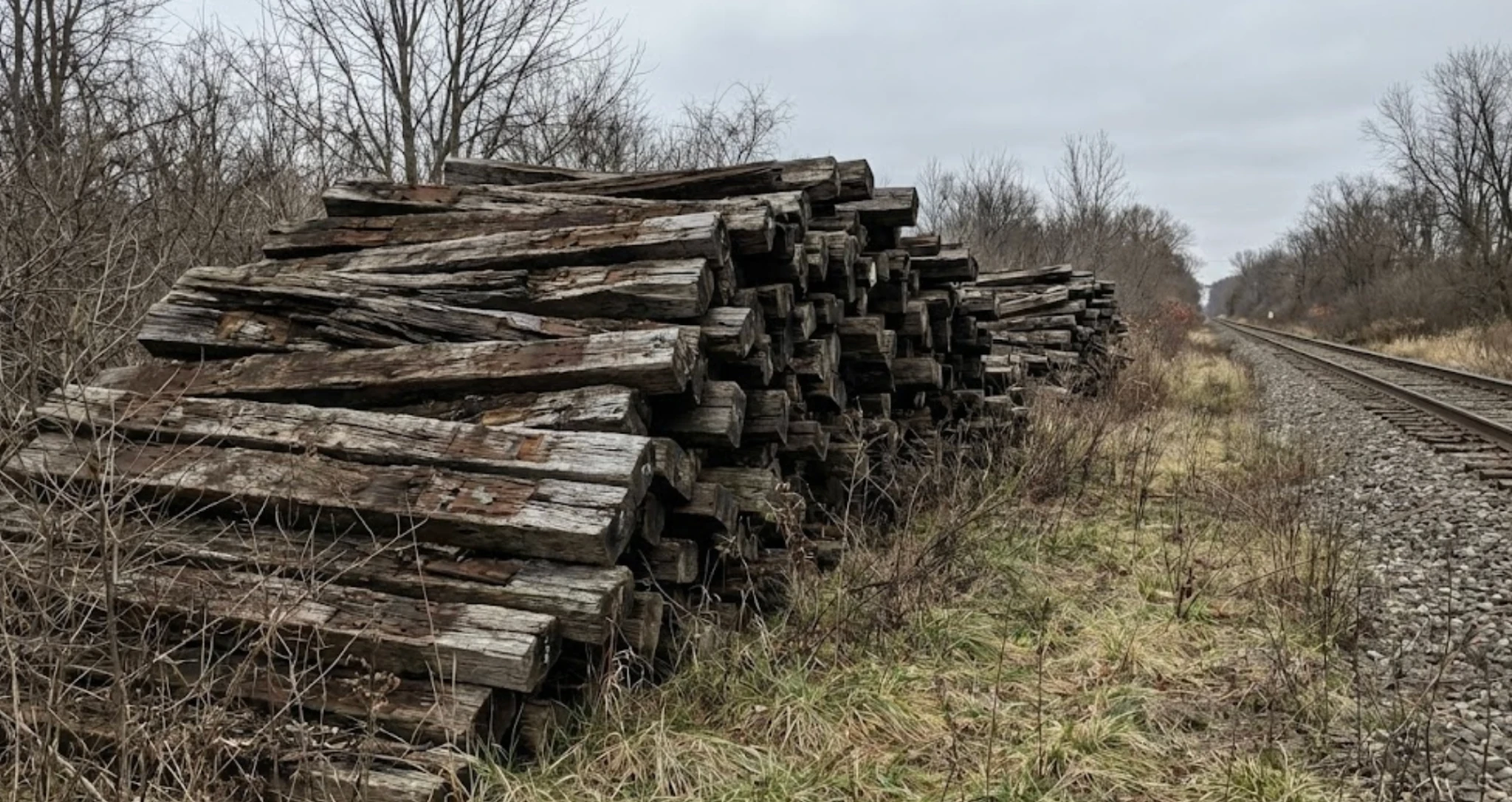
The railroad tie fire in Dunnellon consumed an estimated 30,000 to 40,000 creosote-treated ties, releasing toxic black smoke visible for miles.
Community & Environment
2026-02-045 min readMassive Railroad Tie Fire in Dunnellon: What Happened and What Happens Next
This is a community & environment news article published on 2026-02-04 covering local Marion County, Florida news. A fire that Marion County officials had warned about for months became reality early Sunday morning when thousands of creosote-treated railroad ties erupted into flames in Dunnellon, creating a smoke plume visible for miles and prompting a major emergency response.
Updated 8 months ago
O
Only In Ocala Editorial TeamLocal Content Specialists · 8+ years in Marion County
Share:
A fire that Marion County officials had warned about for months became reality early Sunday morning when thousands of creosote-treated railroad ties erupted into flames in Dunnellon, creating a smoke plume visible for miles and prompting a major emergency response.
What began as a report of a dumpster fire at 2:42 a.m. on February 1, 2026, quickly became something far more serious when firefighters arrived to find a massive inferno consuming tens of thousands of toxic railroad ties. The incident has sparked both a massive firefighting and cleanup operation and a legal battle that could have lasting implications for railroad operations throughout North Central Florida.
What started as a routine dumpster fire call behind an O'Reilly Auto Parts store on East McKinney Street quickly escalated into one of the region's most significant environmental emergencies. When firefighters arrived at the rail yard near North Williams Street, they discovered an inferno consuming an estimated 30,000 to 40,000 wooden railroad ties.
But this wasn't just any fire. The railroad ties were treated with creosote, a coal tar-derived chemical preservative that releases toxic black smoke when burned. Making matters worse, Marion County Fire Rescue was simultaneously battling separate wildfires in the area, stretching emergency resources dangerously thin.
This is precisely the catastrophe that environmental activists and concerned residents had been warning about since October 2025.
The story of these railroad ties began in late summer 2025, when Track Line Rail LLC, a Texas-based company, quietly began transporting tens of thousands of creosote-treated ties to Dunnellon. The company planned to set up a mobile shredding and grinding facility on CSX property along East McKinney Avenue to process the ties for use as alternative fuel in cement kilns.
The stockpile sat less than half a mile from the Rainbow River—one of Florida's most pristine spring-fed waterways—and bordered the historic Chatmire community and the Blue Cove subdivision.
When local residents discovered the massive accumulation of toxic materials in their backyard, they mobilized. Bill White, former Dunnellon mayor and vice president of Rainbow River Conservation, presented photos and videos at a packed town hall meeting on October 27, 2025. More than 200 concerned citizens filled Dunnellon City Hall and spilled into the parking lot, united in their opposition.
"The concerns of Rainbow River Conservation started way back in October, when we first found out the railroad ties had been dropped off in a spring recharge area," White said following the fire. "How could hundreds of thousands of them be stacked there with no one being aware?"
Environmental groups including Rainbow River Conservation, the Sierra Club, and Earthjustice, along with the Concerned Citizens of Chatmire and local officials, rallied against the proposed processing operation. They cited health risks, fire hazards, and the potential for environmental disaster. Around 200 complaints flooded the Florida Department of Environmental Protection—an unusually high volume for an air permit application.
The community's fears were specific and well-founded. The creosote-treated wood sat unprotected on the ground. Residents reported objectionable odors and respiratory irritation just from the ties sitting there. Processing them would release toxic particles into the air. Spraying them with water for dust control—Track Line's proposed mitigation strategy—could send contaminated runoff into the springs system.
"It's absolutely the worst case scenario that we have feared from the beginning," said Debra Gordon of Rainbow River Conservation after the fire erupted.
Marion County issued code violations to both CSX and Track Line. In December 2025, CSX finally agreed to remove all the ties, sending rail cars to transport them out of state. But the removal process was slow. By February 1, 2026, thousands of ties remained.
Then came the fire.
The ties belonged to Track Line Rail, operating on property owned by CSX Transportation. Those warnings went unheeded for months. Now the community is dealing with the consequences they predicted.
The firefighting response to this blaze presented crews with a strategic challenge that required balancing immediate fire suppression with environmental protection.
Marion County Fire Rescue faced a critical decision: drown the flames with water and risk washing toxic chemicals into the nearby Rainbow River, a protected aquatic ecosystem, or adopt a containment strategy that would allow portions of the fire to burn while protecting nearby structures.
They chose the latter, and the strategy proved successful from a structural protection standpoint.
Using heavy bulldozers, crews broke the massive piles apart to create fire breaks, then saturated the perimeter to protect nearby homes in the Blue Cove neighborhood while allowing the center of the stockpile to burn down in a more controlled manner.
However, residents in Blue Cove experienced the fire's frightening impacts firsthand. Some woke at 5:30 a.m. to neighbors pounding on doors, warning them of flames shooting into the sky. Burning embers and pieces of charred railroad ties rained down onto lawns and roofs. Some residents packed suitcases and prepared to evacuate, though Marion County Emergency Management ultimately determined that no mandatory evacuations were necessary, as the fire was 100% contained and air quality test results did not warrant evacuation.
The operation required an estimated one million gallons of water to bring the fire under control. Continuous air quality monitoring has been conducted throughout the incident, with no hazardous air conditions identified.
The frustration in Dunnellon is palpable, and it's directed squarely at the companies responsible for the stockpile.
On Tuesday, February 3, the Marion County Board of County Commissioners voted unanimously to take legal action. The county filed an injunction against CSX Transportation, Track Line Rail, and the Florida Northern Railroad, seeking a court order to force immediate removal of all remaining debris and to recover the substantial costs of the emergency response.
The lawsuit represents more than just financial recovery—it's a statement that Marion County officials believe this disaster was entirely preventable. The fact that residents and local government had been warning about this exact scenario for months adds weight to that argument.
While residents initially had concerns about toxic smoke, continuous air quality testing has been conducted throughout the incident. According to the City of Dunnellon, no air quality issues have been reported, and no hazardous air conditions have been identified through the ongoing monitoring.
The fire is 100% contained but continues to smolder. CSX's hazmat team is monitoring the site 24/7, prepared to mitigate should "hot spots" reignite the fire. While residual smoke from the fire may be bothersome to some in the vicinity, officials emphasize that air quality testing has not identified hazardous conditions.
Regarding drinking water, there is not a wellhead in the immediate area. The Florida Governmental Utility Authority (FGUA) has been contacted and has not reported any water quality issues. For questions regarding potential contamination of private well sites, residents should contact the Florida Department of Environmental Protection at 850-245-8346 or the Florida Department of Health at 352-629-0137.
The Florida Department of Environmental Protection (DEP) representatives were on-site during the fire and continue to monitor the situation. Impacts to the soil and surface water will be determined by FDEP, and mitigation strategies or requirements will be communicated to the public as they become available.
CSX has been actively removing the remaining railroad ties from the site. As of the latest update, approximately 16,500 rail ties have been transported out of the city via rail cars, with an additional 1,200 removed via flatbed tractor trailer. CSX has committed to ensuring the prompt removal of the remaining rail ties, with 28 additional rail cars expected to arrive by next week.
The City of Dunnellon is committed to keeping the public informed as updates become available through the city's website and Facebook page. Inquiries can be directed to City Clerk Mandy Odom at modom@dunnellon.org.
This incident raises critical questions about industrial operations near residential areas and protected natural resources, but it also highlights both the power and the limitations of community organizing.
The months-long fight against the railroad tie stockpile demonstrated remarkable community solidarity. Environmental groups including Rainbow River Conservation, the Sierra Club, Earthjustice, and the Florida Springs Council worked alongside the Concerned Citizens of Chatmire, the NAACP Marion County chapter, and local officials. They packed town halls, flooded state agencies with complaints, and kept constant pressure on the companies involved.
Yet despite all their efforts—despite the code violations, the public outcry, and CSX's eventual agreement to remove the ties—the fire still happened.
One factor that complicated the response: the ties sat on unincorporated CSX property, creating jurisdictional challenges. While some ties had spilled onto Dunnellon city property, allowing the city to issue violations, the bulk of the stockpile fell under county and state authority, limiting what local officials could do.
Marion County's decisive legal action following the fire sends a clear message about accountability. When residents and local officials raise legitimate safety concerns about industrial operations, those warnings deserve to be taken seriously—and responded to quickly—not months later after disaster strikes.
The proximity of this incident to both the historic Chatmire community and the Rainbow River amplifies its significance. The Rainbow, one of Florida's most pristine spring-fed waterways, sits just blocks from where this fire occurred. Environmental justice concerns also loom large, as the ties were stacked bearing down on the edge of properties in Chatmire, a historically Black community.
"We're not anti-progress, we're not against business, but we are anti-harm, and we won't allow Dunnellon to be treated as a dumping ground," said Marion County School Board Member Eric Cummings at the October town hall. "The water is worth protecting, the air is worth protecting, but most of all, our families are worth protecting. And as for the Rainbow River, we will not be the generation that failed her – not here, not now, not ever."
The cleanup operation will likely continue for weeks, and environmental monitoring could take even longer. Meanwhile, Dunnellon residents are left to deal with the aftermath of a fire that many believe should never have happened in the first place.
The City of Dunnellon is providing regular updates through the city's website and Facebook page. For specific inquiries, residents can contact City Clerk Mandy Odom at modom@dunnellon.org. Please understand that city staff may not be able to answer specific questions until further information is made available from other agencies or parties involved.
As this situation continues to develop, OnlyInOcala.com will provide updates on the cleanup progress, environmental monitoring results, and the outcome of Marion County's legal action against the railroad companies.
Update — March 2026: A class action lawsuit has been filed against CSX, Track Line Rail, and Florida Northern Railroad on behalf of Marion County residents, seeking damages and a medical monitoring fund for those potentially exposed to toxic smoke from the fire.
For residents in the affected areas, continue following guidance from Marion County Fire Rescue and the Florida Department of Environmental Protection regarding safety precautions.
---
Was the fire intentionally started?
The cause of the fire is undetermined. CSX is cooperating with state officials in investigating the cause of the fire.
Why were so many railroad ties stockpiled in Dunnellon?
Track Line Rail LLC, a Texas-based company, transported the creosote-treated ties to Dunnellon starting in late summer/early fall 2025. The company planned to set up a mobile shredding and grinding facility on CSX property to process the ties for use as alternative fuel in cement kilns. The ties were stored on CSX railroad property along East McKinney Avenue.
Had the community tried to get the ties removed before the fire?
Yes, extensively. Starting in October 2025, environmental groups including Rainbow River Conservation, the Sierra Club, Earthjustice, and the Concerned Citizens of Chatmire, along with local officials, organized against the stockpile. More than 200 people packed a town hall meeting on October 27, 2025. Marion County issued code violations, and around 200 complaints were filed with the Florida Department of Environmental Protection. In December 2025, CSX agreed to begin removing the ties, but thousands remained when the fire occurred on February 1, 2026.
When and where did the railroad tie fire occur?
The fire began at 2:42 a.m. on Sunday, February 1, 2026, at a rail yard near East McKinney Street and North Williams Street in Dunnellon, Florida.
How many railroad ties were involved in the fire?
Firefighters encountered a stockpile of approximately 30,000 to 40,000 wooden railroad ties that had ignited.
What makes this fire particularly dangerous?
The railroad ties were treated with creosote, a chemical preservative derived from coal tar. When burned, creosote releases thick black smoke containing toxic chemicals that are harmful to breathe and potentially damaging to the environment.
Why didn't firefighters just put out the fire immediately?
Firefighters faced a difficult strategic decision. Using massive amounts of water to extinguish the flames risked washing toxic chemicals into the nearby Rainbow River, a protected ecosystem. Instead, they chose a containment strategy—using bulldozers to break up the piles and create fire breaks while protecting nearby structures and allowing the center to burn in a more controlled manner.
Were any evacuations necessary?
No. Marion County Emergency Management determined that no evacuations were necessary because the fire was 100% contained and air quality test results did not warrant evacuation. However, some residents in the nearby Blue Cove subdivision woke to neighbors warning them about the fire and prepared to evacuate. Burning embers and pieces of charred railroad ties fell onto lawns and roofs in the neighborhood.
How did the fire impact nearby residents?
Residents in the Blue Cove subdivision, located just blocks from the fire, experienced frightening conditions. Some were awakened at 5:30 a.m. by neighbors pounding on doors to warn them of flames shooting into the sky. Burning embers and pieces of charred railroad ties rained down onto lawns and roofs throughout the neighborhood. While no mandatory evacuations were ordered, some residents packed suitcases and prepared to leave their homes out of fear.
How much water was used to fight this fire?
Marion County Fire Rescue estimates that nearly one million gallons of water were used to control and contain the blaze.
Who owns the railroad ties that caught fire?
The railroad ties belonged to Track Line Rail, a private contractor operating on property owned by CSX Transportation.
Were officials warned about this hazard before the fire?
Yes. For months prior to the incident, Dunnellon residents and city officials had been raising concerns about the stockpile, warning it posed a significant fire hazard. These warnings went unaddressed before the fire occurred.
What legal action is being taken?
On February 3, 2026, the Marion County Board of County Commissioners voted unanimously to file an injunction against CSX Transportation, Track Line Rail, and the Florida Northern Railroad. The county is seeking a court order to force immediate removal of remaining debris and to recover emergency response costs. Additionally, a class action lawsuit was filed on February 23 by The G Law Group on behalf of affected residents, seeking compensatory and punitive damages as well as a court-supervised medical monitoring fund.
What health precautions should residents take?
Continuous air quality testing has been conducted, and no air quality issues or hazardous air conditions have been reported. While residual smoke from the fire may be bothersome to some in the vicinity, officials have not identified hazardous conditions through ongoing monitoring. The fire is 100% contained, and CSX's hazmat team is monitoring the site 24/7.
Which organizations fought to have the railroad ties removed?
Multiple groups worked together to oppose the stockpile and proposed processing facility: Rainbow River Conservation (led by former Dunnellon Mayor Bill White and board member Debra Gordon), the Sierra Club Florida, Earthjustice, the Florida Springs Council, Concerned Citizens of Chatmire, and the NAACP Marion County chapter. Local officials including Marion County Commissioner Kathy Bryant, Dunnellon Mayor Walter Green, and State Representative J.J. Grow also actively opposed the operation.
Is the Rainbow River at risk of contamination?
The Florida Department of Environmental Protection (DEP) representatives were on-site during the fire and continue to monitor the situation. Impacts to the soil and surface water will be determined by FDEP, and mitigation strategies or requirements will be communicated to the public as they become available.
Is drinking water safe?
There is not a wellhead in the immediate area. The Florida Governmental Utility Authority (FGUA) has been contacted and has not reported any water quality issues. Questions regarding potential contamination of private well sites should be directed to the Florida Department of Environmental Protection at 850-245-8346 or the Florida Department of Health at 352-629-0137.
What is the current status of the cleanup?
As of the latest update, CSX has transported approximately 16,500 rail ties out of the city via rail cars and approximately 1,200 via flatbed tractor trailer. CSX is committed to ensuring the prompt removal of the remaining rail ties, with 28 additional rail cars expected to arrive by next week. The cleanup operation is ongoing.
Could this happen again?
That depends on the outcome of Marion County's legal action and whether additional regulations or oversight are implemented to prevent similar stockpiles from being maintained near residential areas and sensitive environmental zones.
The railroad tie fire in Dunnellon consumed an estimated 30,000 to 40,000 creosote-treated ties, releasing toxic black smoke visible for miles.
What began as a report of a dumpster fire at 2:42 a.m. on February 1, 2026, quickly became something far more serious when firefighters arrived to find a massive inferno consuming tens of thousands of toxic railroad ties. The incident has sparked both a massive firefighting and cleanup operation and a legal battle that could have lasting implications for railroad operations throughout North Central Florida.
A Disaster Foretold
What started as a routine dumpster fire call behind an O'Reilly Auto Parts store on East McKinney Street quickly escalated into one of the region's most significant environmental emergencies. When firefighters arrived at the rail yard near North Williams Street, they discovered an inferno consuming an estimated 30,000 to 40,000 wooden railroad ties.
But this wasn't just any fire. The railroad ties were treated with creosote, a coal tar-derived chemical preservative that releases toxic black smoke when burned. Making matters worse, Marion County Fire Rescue was simultaneously battling separate wildfires in the area, stretching emergency resources dangerously thin.
This is precisely the catastrophe that environmental activists and concerned residents had been warning about since October 2025.
Months of Warnings Ignored
The story of these railroad ties began in late summer 2025, when Track Line Rail LLC, a Texas-based company, quietly began transporting tens of thousands of creosote-treated ties to Dunnellon. The company planned to set up a mobile shredding and grinding facility on CSX property along East McKinney Avenue to process the ties for use as alternative fuel in cement kilns.
The stockpile sat less than half a mile from the Rainbow River—one of Florida's most pristine spring-fed waterways—and bordered the historic Chatmire community and the Blue Cove subdivision.
When local residents discovered the massive accumulation of toxic materials in their backyard, they mobilized. Bill White, former Dunnellon mayor and vice president of Rainbow River Conservation, presented photos and videos at a packed town hall meeting on October 27, 2025. More than 200 concerned citizens filled Dunnellon City Hall and spilled into the parking lot, united in their opposition.
"The concerns of Rainbow River Conservation started way back in October, when we first found out the railroad ties had been dropped off in a spring recharge area," White said following the fire. "How could hundreds of thousands of them be stacked there with no one being aware?"
Environmental groups including Rainbow River Conservation, the Sierra Club, and Earthjustice, along with the Concerned Citizens of Chatmire and local officials, rallied against the proposed processing operation. They cited health risks, fire hazards, and the potential for environmental disaster. Around 200 complaints flooded the Florida Department of Environmental Protection—an unusually high volume for an air permit application.
The community's fears were specific and well-founded. The creosote-treated wood sat unprotected on the ground. Residents reported objectionable odors and respiratory irritation just from the ties sitting there. Processing them would release toxic particles into the air. Spraying them with water for dust control—Track Line's proposed mitigation strategy—could send contaminated runoff into the springs system.
"It's absolutely the worst case scenario that we have feared from the beginning," said Debra Gordon of Rainbow River Conservation after the fire erupted.
Marion County issued code violations to both CSX and Track Line. In December 2025, CSX finally agreed to remove all the ties, sending rail cars to transport them out of state. But the removal process was slow. By February 1, 2026, thousands of ties remained.
Then came the fire.
The ties belonged to Track Line Rail, operating on property owned by CSX Transportation. Those warnings went unheeded for months. Now the community is dealing with the consequences they predicted.
Strategic Firefighting Response
The firefighting response to this blaze presented crews with a strategic challenge that required balancing immediate fire suppression with environmental protection.
Marion County Fire Rescue faced a critical decision: drown the flames with water and risk washing toxic chemicals into the nearby Rainbow River, a protected aquatic ecosystem, or adopt a containment strategy that would allow portions of the fire to burn while protecting nearby structures.
They chose the latter, and the strategy proved successful from a structural protection standpoint.
Using heavy bulldozers, crews broke the massive piles apart to create fire breaks, then saturated the perimeter to protect nearby homes in the Blue Cove neighborhood while allowing the center of the stockpile to burn down in a more controlled manner.
However, residents in Blue Cove experienced the fire's frightening impacts firsthand. Some woke at 5:30 a.m. to neighbors pounding on doors, warning them of flames shooting into the sky. Burning embers and pieces of charred railroad ties rained down onto lawns and roofs. Some residents packed suitcases and prepared to evacuate, though Marion County Emergency Management ultimately determined that no mandatory evacuations were necessary, as the fire was 100% contained and air quality test results did not warrant evacuation.
The operation required an estimated one million gallons of water to bring the fire under control. Continuous air quality monitoring has been conducted throughout the incident, with no hazardous air conditions identified.
Legal Fallout and Community Anger
The frustration in Dunnellon is palpable, and it's directed squarely at the companies responsible for the stockpile.
On Tuesday, February 3, the Marion County Board of County Commissioners voted unanimously to take legal action. The county filed an injunction against CSX Transportation, Track Line Rail, and the Florida Northern Railroad, seeking a court order to force immediate removal of all remaining debris and to recover the substantial costs of the emergency response.
The lawsuit represents more than just financial recovery—it's a statement that Marion County officials believe this disaster was entirely preventable. The fact that residents and local government had been warning about this exact scenario for months adds weight to that argument.
Health Monitoring and Air Quality
While residents initially had concerns about toxic smoke, continuous air quality testing has been conducted throughout the incident. According to the City of Dunnellon, no air quality issues have been reported, and no hazardous air conditions have been identified through the ongoing monitoring.
The fire is 100% contained but continues to smolder. CSX's hazmat team is monitoring the site 24/7, prepared to mitigate should "hot spots" reignite the fire. While residual smoke from the fire may be bothersome to some in the vicinity, officials emphasize that air quality testing has not identified hazardous conditions.
Regarding drinking water, there is not a wellhead in the immediate area. The Florida Governmental Utility Authority (FGUA) has been contacted and has not reported any water quality issues. For questions regarding potential contamination of private well sites, residents should contact the Florida Department of Environmental Protection at 850-245-8346 or the Florida Department of Health at 352-629-0137.
Environmental Monitoring and Cleanup Progress
The Florida Department of Environmental Protection (DEP) representatives were on-site during the fire and continue to monitor the situation. Impacts to the soil and surface water will be determined by FDEP, and mitigation strategies or requirements will be communicated to the public as they become available.
CSX has been actively removing the remaining railroad ties from the site. As of the latest update, approximately 16,500 rail ties have been transported out of the city via rail cars, with an additional 1,200 removed via flatbed tractor trailer. CSX has committed to ensuring the prompt removal of the remaining rail ties, with 28 additional rail cars expected to arrive by next week.
The City of Dunnellon is committed to keeping the public informed as updates become available through the city's website and Facebook page. Inquiries can be directed to City Clerk Mandy Odom at modom@dunnellon.org.
What This Means for Our Region
This incident raises critical questions about industrial operations near residential areas and protected natural resources, but it also highlights both the power and the limitations of community organizing.
The months-long fight against the railroad tie stockpile demonstrated remarkable community solidarity. Environmental groups including Rainbow River Conservation, the Sierra Club, Earthjustice, and the Florida Springs Council worked alongside the Concerned Citizens of Chatmire, the NAACP Marion County chapter, and local officials. They packed town halls, flooded state agencies with complaints, and kept constant pressure on the companies involved.
Yet despite all their efforts—despite the code violations, the public outcry, and CSX's eventual agreement to remove the ties—the fire still happened.
One factor that complicated the response: the ties sat on unincorporated CSX property, creating jurisdictional challenges. While some ties had spilled onto Dunnellon city property, allowing the city to issue violations, the bulk of the stockpile fell under county and state authority, limiting what local officials could do.
Marion County's decisive legal action following the fire sends a clear message about accountability. When residents and local officials raise legitimate safety concerns about industrial operations, those warnings deserve to be taken seriously—and responded to quickly—not months later after disaster strikes.
The proximity of this incident to both the historic Chatmire community and the Rainbow River amplifies its significance. The Rainbow, one of Florida's most pristine spring-fed waterways, sits just blocks from where this fire occurred. Environmental justice concerns also loom large, as the ties were stacked bearing down on the edge of properties in Chatmire, a historically Black community.
"We're not anti-progress, we're not against business, but we are anti-harm, and we won't allow Dunnellon to be treated as a dumping ground," said Marion County School Board Member Eric Cummings at the October town hall. "The water is worth protecting, the air is worth protecting, but most of all, our families are worth protecting. And as for the Rainbow River, we will not be the generation that failed her – not here, not now, not ever."
The cleanup operation will likely continue for weeks, and environmental monitoring could take even longer. Meanwhile, Dunnellon residents are left to deal with the aftermath of a fire that many believe should never have happened in the first place.
Staying Informed
The City of Dunnellon is providing regular updates through the city's website and Facebook page. For specific inquiries, residents can contact City Clerk Mandy Odom at modom@dunnellon.org. Please understand that city staff may not be able to answer specific questions until further information is made available from other agencies or parties involved.
As this situation continues to develop, OnlyInOcala.com will provide updates on the cleanup progress, environmental monitoring results, and the outcome of Marion County's legal action against the railroad companies.
Update — March 2026: A class action lawsuit has been filed against CSX, Track Line Rail, and Florida Northern Railroad on behalf of Marion County residents, seeking damages and a medical monitoring fund for those potentially exposed to toxic smoke from the fire.
For residents in the affected areas, continue following guidance from Marion County Fire Rescue and the Florida Department of Environmental Protection regarding safety precautions.
---
Frequently Asked Questions
Was the fire intentionally started?
The cause of the fire is undetermined. CSX is cooperating with state officials in investigating the cause of the fire.
Why were so many railroad ties stockpiled in Dunnellon?
Track Line Rail LLC, a Texas-based company, transported the creosote-treated ties to Dunnellon starting in late summer/early fall 2025. The company planned to set up a mobile shredding and grinding facility on CSX property to process the ties for use as alternative fuel in cement kilns. The ties were stored on CSX railroad property along East McKinney Avenue.
Had the community tried to get the ties removed before the fire?
Yes, extensively. Starting in October 2025, environmental groups including Rainbow River Conservation, the Sierra Club, Earthjustice, and the Concerned Citizens of Chatmire, along with local officials, organized against the stockpile. More than 200 people packed a town hall meeting on October 27, 2025. Marion County issued code violations, and around 200 complaints were filed with the Florida Department of Environmental Protection. In December 2025, CSX agreed to begin removing the ties, but thousands remained when the fire occurred on February 1, 2026.
When and where did the railroad tie fire occur?
The fire began at 2:42 a.m. on Sunday, February 1, 2026, at a rail yard near East McKinney Street and North Williams Street in Dunnellon, Florida.
How many railroad ties were involved in the fire?
Firefighters encountered a stockpile of approximately 30,000 to 40,000 wooden railroad ties that had ignited.
What makes this fire particularly dangerous?
The railroad ties were treated with creosote, a chemical preservative derived from coal tar. When burned, creosote releases thick black smoke containing toxic chemicals that are harmful to breathe and potentially damaging to the environment.
Why didn't firefighters just put out the fire immediately?
Firefighters faced a difficult strategic decision. Using massive amounts of water to extinguish the flames risked washing toxic chemicals into the nearby Rainbow River, a protected ecosystem. Instead, they chose a containment strategy—using bulldozers to break up the piles and create fire breaks while protecting nearby structures and allowing the center to burn in a more controlled manner.
Were any evacuations necessary?
No. Marion County Emergency Management determined that no evacuations were necessary because the fire was 100% contained and air quality test results did not warrant evacuation. However, some residents in the nearby Blue Cove subdivision woke to neighbors warning them about the fire and prepared to evacuate. Burning embers and pieces of charred railroad ties fell onto lawns and roofs in the neighborhood.
How did the fire impact nearby residents?
Residents in the Blue Cove subdivision, located just blocks from the fire, experienced frightening conditions. Some were awakened at 5:30 a.m. by neighbors pounding on doors to warn them of flames shooting into the sky. Burning embers and pieces of charred railroad ties rained down onto lawns and roofs throughout the neighborhood. While no mandatory evacuations were ordered, some residents packed suitcases and prepared to leave their homes out of fear.
How much water was used to fight this fire?
Marion County Fire Rescue estimates that nearly one million gallons of water were used to control and contain the blaze.
Who owns the railroad ties that caught fire?
The railroad ties belonged to Track Line Rail, a private contractor operating on property owned by CSX Transportation.
Were officials warned about this hazard before the fire?
Yes. For months prior to the incident, Dunnellon residents and city officials had been raising concerns about the stockpile, warning it posed a significant fire hazard. These warnings went unaddressed before the fire occurred.
What legal action is being taken?
On February 3, 2026, the Marion County Board of County Commissioners voted unanimously to file an injunction against CSX Transportation, Track Line Rail, and the Florida Northern Railroad. The county is seeking a court order to force immediate removal of remaining debris and to recover emergency response costs. Additionally, a class action lawsuit was filed on February 23 by The G Law Group on behalf of affected residents, seeking compensatory and punitive damages as well as a court-supervised medical monitoring fund.
What health precautions should residents take?
Continuous air quality testing has been conducted, and no air quality issues or hazardous air conditions have been reported. While residual smoke from the fire may be bothersome to some in the vicinity, officials have not identified hazardous conditions through ongoing monitoring. The fire is 100% contained, and CSX's hazmat team is monitoring the site 24/7.
Which organizations fought to have the railroad ties removed?
Multiple groups worked together to oppose the stockpile and proposed processing facility: Rainbow River Conservation (led by former Dunnellon Mayor Bill White and board member Debra Gordon), the Sierra Club Florida, Earthjustice, the Florida Springs Council, Concerned Citizens of Chatmire, and the NAACP Marion County chapter. Local officials including Marion County Commissioner Kathy Bryant, Dunnellon Mayor Walter Green, and State Representative J.J. Grow also actively opposed the operation.
Is the Rainbow River at risk of contamination?
The Florida Department of Environmental Protection (DEP) representatives were on-site during the fire and continue to monitor the situation. Impacts to the soil and surface water will be determined by FDEP, and mitigation strategies or requirements will be communicated to the public as they become available.
Is drinking water safe?
There is not a wellhead in the immediate area. The Florida Governmental Utility Authority (FGUA) has been contacted and has not reported any water quality issues. Questions regarding potential contamination of private well sites should be directed to the Florida Department of Environmental Protection at 850-245-8346 or the Florida Department of Health at 352-629-0137.
What is the current status of the cleanup?
As of the latest update, CSX has transported approximately 16,500 rail ties out of the city via rail cars and approximately 1,200 via flatbed tractor trailer. CSX is committed to ensuring the prompt removal of the remaining rail ties, with 28 additional rail cars expected to arrive by next week. The cleanup operation is ongoing.
Could this happen again?
That depends on the outcome of Marion County's legal action and whether additional regulations or oversight are implemented to prevent similar stockpiles from being maintained near residential areas and sensitive environmental zones.
Dunnellon
Environment
Emergency Response
Rainbow River
Marion County
Community Safety
Environmental Protection
Related Ocala Guides
More context and planning resources from Only In Ocala.